Showing posts with label Katherine Pym. Show all posts

Monday, October 19, 2020

Meandering on Monday with Janet Lane Walters #Reading, Writing, Thoughts

Meander 1 - Reading - This week my reading has been with several writers. One Is Katherine Pym's Begotten - a historical fantasy that gave me a lot to think about. I've known very little about the land she featured and I find the amount of research she had to do overwhelming but the book was read with enjoyment. I also read F. M. Meredith's forst book in her series featuring a native American heroine and the town where she lives and works as a county sheriff's deputy. Both books were wonderful.


Meander 2 Thoughts - Voting - Seeing the number of early voters amazes me and heartens me. I'm hoping and praying there will be a change. As to my voting, I will vote on election day and be on the alert for hecklers and those who want to disrupt the process. Would they happen in such a small town or village. I'm not sure but I decided not to do mail in or vote early but to stand up and do iton election day.


Meander 3 - Writing - The final revision is going well. What I really wish is that I could finish typing the last two chapters so I can finish the final draft and send it off. Not sure who will get it as editor but Jude will let me know.


My Places

https://twitter.com/JanetL717

 https://www.facebook.com/janet.l.walters.3?v=wall&story_f

bid=113639528680724

 http://bookswelove.net/

 http://wwweclecticwriter.blogspot.com

https://www.pinterest.com/shadyl717/


Buy Mark

http://bookswelove.net/walters-janet-lane/


Saturday, July 7, 2018

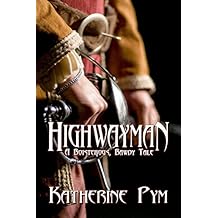
Saturday's Blurbs feature Books by Katherine Pym #MFRWauthor #Historical #Highwayman #BWL Publishing


Highwayman: A Boisterous, Bawdy Tale

Highwayman, a Boisterous, Bawdy Tale, (London 1666)
It is London 1666 and the plague is waning. The 2nd Anglo/Dutch war rages at sea. Lord Pilcher, a staunch Cromwell man, hates his grandson who followed King Charles II into exile. When Geoffrey returns to England, bereft and weary, he hopes for succor and support from his grandfather but Pilcher does everything he can to deny Geoffrey his inheritance. As a result, Geoffrey resorts to deceit. He steals goods and money from his grandfather that, by right, should be his.

After the death of their parents, Erasmus and Desiderius find Gentleman Jack and are welcomed into his gang of fellows. They learn sleight of hand, transfer stolen goods to cunning hidey-holes. They learn how to be nefarious and follow their leader’s skullduggery. Dodging the constables and the sheriff, will they be caught and hanged for highway robbery?


Erasmus T. Muddiman, A Tale of Publick Distemper (London 1665)
It is London 1665, a year fraught with strange and unearthly events. Comets fly low in the sky while merchants clamor for war.

Eleven year old Erasmus T. Muddiman attends St Paul’s School with his younger brother. He enjoys Latin but hates to create Latin verses, preferring the new sciences as seen at the Royal Society. He plays football with the lads in Paul’s Yard, shimmies up the drainpipe outside his bedchamber window and he saves his brother, Desiderius, from all sorts of scrapes.

Soon, Erasmus cannot avoid the rumors of war. Men and boys are pressganged, taken to ships or the dockyards. Plague enters the city. As school fellows disappear, Erasmus and his family meet a terrible fate of survival. Who will live and who will die?


Pillars of Avalon (Newfoundland) by Katherine Pym and Jude Pittman (London & Newfoundland, New France, 17th century)
David and Sara Kirke live in a time of upheaval under the reign of King Charles I who gives, then takes. He gives David the nod of approval to range up and down the French Canadian shores, burning colonies and pillaging ships that are loaded with goods meant for the French.

When Louis XIII of France shouts his outrage, King Charles reneges. He takes David’s prizes and returns them to the French, putting David and his family in dire straits. Undeterred, David and Sara will not be denied. After years, the king relents. He knights David and gives him a grant for the whole of Newfoundland and Labrador. There David and Sara build a prosperous plantation. They trade fish and fish oil with colonies down the American coast, Barbados and ports of call in the Mediterranean. They thrive while England is torn in two by the civil wars. Soon, these troubles engulf his family. David is carried in chains back to England to stand trial for being a malignant, a follower of Laud's high church. He entreats Sara to manage the Ferryland plantation, a daunting task but with a strength that defies a stalwart man, she digs in and prospers, becoming the first entrepreneur of Newfoundland.


Friday, July 6, 2018

Friday's Guest - Katherine Pym #MFRWauthor #BWL Publishing #History #research

1     What were you in your life before you became a writer? Did this influence your writing?

I was a normal every day person who went to school, got married, had children, then was divorced, went to work, took the kids to daycare, and because I could not afford to go anywhere or do anything, I started reading historical romances. My sister and I, who were intellectual snobs, said over a night of drinking a few wines, we could write one. How hard could it be? Well…

It was harder than we thought, the research daunting. My sister bailed after a while but I was hooked. Research took me away from historical romances into real life history. Often regular people are more interesting than fictional, or in my usual cases, real life events are more interesting than fictional events.

2.    Are you genre specific or general? Why? I don't mean genres like romance, mystery, fantasy etc. There are many subgenres of the above. 

For the most part I am genre specific, even as I’ve written a YA fantasy and an alternative historical fiction. My YA fantasy, The Salt Box, was researched, especially the use of a ‘god-door’ that appears on the side of a hill, and has a lot of ancient Celtic mystical lore. The alternative story, Miri’s Song, the love story of Joshua & Magdalene, has no research behind it. I just sat down one evening and started to write it without prep. I was surprised by the outcome.

The rest of my work is based on intense historical research, down to the everyday life people led. I want the reader to ‘feel’ as if they had walked the streets of Paris and London.

3. Did your reading choices have anything to do with your choice of a genre or genres? 

Very much so. I like history but as taught in school those heavy tomes rarely tell you how technicians reacted to the new x-ray machine in hospitals (early 1900’s), how they eventually died of radiation poisoning.

How often have you had a history teacher say due to the 2nd Anglo/Dutch war (1665-1667), when King Charles II’s cousin, Louis XIV, sided with the Dutch, Charles disavowed everything French. He changed his fashion to what everyone considers the norm of the 18th century with the long coats and tight breeches.

Generally, historical texts focus on government decisions and the wars they brought. Often the discussion is about endless battles, their names and dates, the generals. It does not tell the reader true people stories, their thoughts, their fears.

I went another way and received a degree in Literature where one can peruse what people of different eras thought and felt. After all, they wrote of their trials and tribulations and how big events and government decisions affected their lives. Their tales told of tragedies and comedies, exploration of the world, the mind, and the body. Theirs were the human interest stories I craved while studying history but could not find.

4. What's your latest release? Highwayman, A Boisterous Bawdy Tale, May 2018

5. What are you working on now? A story for an anthology. All of our submissions will deal with the Bubonic Plague. Light reading, huh?

6. Where can we find you? 
twitter: @KatherinePym

Saturday, March 8, 2014

Saturday's Excerpt from The Barber by Katherine Pym


Chapter One

London, January 1663

After nine o’clock in the morning, daylight finally peeped its dreary head above London. Clouds and coal smoke wisped low to obscure church steeples and house rooftops. Men pulled carts piled with goods, their ironclad wheels making an unholy din against the icy cobblestones.  People clogged the lanes, their chatter loud as they competed with the ringing cartwheels.
Wrapped snug in a heavy cloak and hood, and a woolen scarf slung around her neck, Celia Barber and her half-sister, Priscilla, slogged along City lanes filled with snow and ice. As they met clusters of passersby, Celia gazed into their faces to see if she would recognize her mother. When a bairn of three years, her mam had cast her to the streets--shoved her out the door and locked it tight. Dressed only in a nightshift, barefoot and hungry, Celia remembered pounding on the panel until her hands bled.
Like a dark specter, her frightened screams still echoed across the years.  Almost every night she dreamed of it, felt the searing terror when lost amidst so many skirts, breeches, and shoes as folk trod along the muck filled lane. Even today, years later, she’d awaken with a sob in her throat.
Suddenly, Celia bumped against her half-sister.
“Ach!” Priscilla cried. “Do keep thyself upright.”
She and her sister worked their way to Whitehall Palace, and to a high lady there. She was ill with a fevered finger, and must be tended to at once. Why Priscilla’s aristocratic employer hadn’t called for a palace physician, Celia could not reckon. If they found her, a low person and a woman, doing surgery on a high person instead of barbering, they’d have her head.
Men of physic who tended the king and his ilk were an arrogant lot. She’d be safer to stay within at Papa’s shop whilst he practiced barbery and she tended to the sick.
Her foot scraped through a pile of rotten giblets, and she slipped. With a yelp, she straightened and continued to trudge through lanes that were quite horrid. The last two winters had been green wherein it never got too cold, but this year told quite another tale. Ice floated in the River Thames.
They rounded a corner to a lane that stank to high heaven. Rubbish and muck steamed in the kennel whilst pigs and curs fought over fouled meat. Windows opened and shouts came from above. They warned, “Gardy loo,” before piss and shit rained onto the street. The dogs yelped and pigs squealed as they shot away from the streaming stench.
Frozen to the bone, Celia wished they had coin to travel by hackney coach, but at least most houses along the lanes provided cover where their eaves jutted overhead. It prevented them from being thoroughly doused. Only small splashes of the muck dirtied their skirts.
“`Tis frosty out here, ain’t it?” Priscilla huffed as she skimmed along the outside of the eaves nearest the kennel. “Me foot’s awash with piss. I could do with an extra coin for a coach. We’d be cleaner upon arrival to me lady’s.”


Friday, March 7, 2014

Friday's How She Does It featuring Katherine Pym


The plot is absolutely the 6th element of fiction, and the most important. Everything intertwines into the plot. It's the core, the soul of the story.

1.       How do you create your characters? Do you have a specific method?

When I come up with the story line, the major character must be part of it. His/her story should suffer through the conflicts. The other characters are attached as required and sometimes show up unannounced. In The Barbers, Celia suffered her whole life from cruel rejection. Priscilla showed up as a periphery character, and at times, almost took over. I had to reel her in so that Celia could continue on as the main protagonist.

2.       Do your characters come before the plot?

Sometimes. For The Barbers, I knew Celia’s conflict and how she would work through it. Before I wrote Twins, I had run into a little known superstition that a man can sire one child at a time. If a woman had twins, she was clearly an adulteress, or a complete wanton. In this case, the conflict came first, then I added the twins, fraternal – a boy and a girl – to make things more complex.

3.       Do you know how the story will end before you begin? In a general way or a specific one?

Yes, I always know how it will end. It’s important for the cohesiveness of the story, a build up of the plot, development of the characters right to the end. Without knowing the end would put my story in jeopardy.

4.       Do you choose settings you know or do you have books of settings and plans of houses sitting around?

It depends. When I wrote The First Apostle, which is of the French Revolution, I went to Paris. Much of what was during the late 18th century is still there, today. My stories of London deal with the time prior to the great fire of 1666. I went to London once and knew there was nothing really left of it that had been (the Tower and Westminster, perhaps, but little else.), not even a nook at the end of a narrow lane. Everything burned to the ground within the ancient walls of the city. The London I write of, even a half century later, was still Elizabethan London. I have an Elizabethan street map of London, and use that. It’s the type of map you see in old churches of a parish. It is an extremely handy tool, and gives me a real feel of the area, of the period, although by the mid-17th century, the fields north and west of the City were filling in with houses, taverns, the theatre district.

5.       Where do you do your research? On line or from books?

Both. When I’m doing research from a source I like, I look at the Bibliography, go online to see if I can find it, then either try to download it or buy it. Some used bookstores are a wonderful source of historical information. I’ve even gone to Canada and England to find good resource texts. Once, while in England, I went into a university library, and found the perfect source for one of my novels. It sat bereft in the stacks; hadn’t been checked out since before WWII, but because I was not a student, nor a citizen, I was not allowed to check it out. I left the library and within a week or so, filled a sock with as many 5 pence pieces as I could. With those, at the photocopier, I made copies of every single page of the book, some 350+ pages. You cannot keep a determined girl down. ‘Where there is a will there is a way’ is my motto.


6.       Are you a draft writer or do you revise as you go along and why? Do you sketch out your plot or do you let the characters develop the route to the end?

I’ll sit down to write with an idea of how it will go. Once a chapter is down, later, say the next day or so, I’ll reread it, make changes as I see fit. Working the previous chapter marks the way into the next chapter. Since I know how the story ends, I try to make the chapters weave together like a basket.

I’ve tried sketches, outlines, but they don’t work for me. During the writing journey, unexpected turns and twists take place that really quite surprise me sometimes. I’ll sit back and murmur, “I wasn’t expecting that, but I like it.” Those moments are quite the thrill of one's creative juices.

I don’t plot by the seat of my pants, though. I know what the conflicts are, who are affected by them, and the conclusion. The characters give their own personality along the route, but they must adhere to my final word.