Showing posts with label critique. Show all posts

Sunday, November 14, 2021

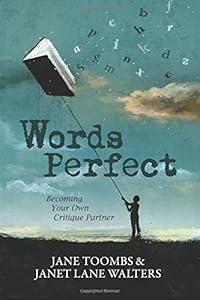
Words Perfect is featured today as Sunday's Book #MFRWAuthor #Writing


Not everyone has access to a good critique group. If you're on your own and need someone to help polish your manuscript so it shines in the eyes of agents and editors, look no further. Using examples from their own work and a huge dash of humor, veteran authors Jane Toombs and Janet Lane Walters guide both the new writer and the experienced through the labyrinth of self-editing.


Becoming Your Own Critique Partner by Janet Lane Walters (2006-09-13)

Amazon Customer
Mayra Calvani--Midwest Book Review

February 16, 2007

Format : Mass Market Paperback
This new book on self-editing written by two very prolific authors is one you'll definitely want to add to your bookshelf.

What are the major problems you should be on the lookout for when editing your own work? The answer isn't always easy, as authors tend to become so involved in their plot and characters they turn blind to the obvious. Sometimes the problems are easy to spot and fix, sometimes not. Whatever the case, Walters and Toombs guide you through the process of completely editing your fiction manuscript.

With specific examples taken from their own works, the authors demonstrate how to handle telling instead of showing, stilted and flat dialogue, weak and unrealistic characters, unnecessary scenes, overuse of adjectives and adverbs, lack of atmosphere, point of view shifts, bloated prose, clichés, among others. They also share the secret to strong characters and the six necessary elements to a master plot. Each chapter concentrates on a specific subject, with helpful exercises at the end of it.

Written in a clear, friendly, straight-forward style, Becoming Your Own Critique Partner is a reference book that both beginners and professionals will profit from.

Reviewed in the United States on April 20, 2011
Verified Purchase
I was excited to receive this book in the mail today and I sat down and read it in one sitting. It is full of useful information that I will use again and again. I'm definitely glad that I bought it.

Reviewer:

Norman Goldman "Editor of Bookpleasures.com"

Checking out the Internet as well as various other sources I notice there is a great deal of excellent advice on writing techniques. Unfortunately, many aspiring writers as well as experienced ones either neglect the advice or are unaware of its existence.
There are also local critique groups and countless workshops, seminars, and other avenues where writers can learn how to improve their writing skills, however often it is not convenient for one reason or another to participate in these tutorials.
Authors Jane Toombs and Janet Lane Walters have combined their 63 years of writing experience and knowledge to come up with a practical solution to help us become our own critique partner with their 236 page manual, Becoming Your Own Critique Partner, particularly when participation in a critique group is either impossible or impractical.

The primary focus of the book is, as the authors mention in their introduction, "to find the flaws in your manuscript and correct them." The most obvious flaws that are examined and explored are telling too much and not showing, weak and flat dialogue, the black moment when the focus character (villain or hero) in the story believes all is lost, scenes and their relevance, where to use adjectives and adverbs, finding ways to use the appropriate senses, pacing, effectively using points of view, plugging holes in your plot, cutting the fat from the bone, avoiding clichés, what not to do with the details, places where mood in the story affects your characters, finding your theme and using it to solidify your plot, spotting awkward time and place shifts, characters and their motivation, ways to keep the heart in your writing, questions writers should ask themselves about minor but pertinent errors, and the proper use of words that are not annoying.

The chapters of the book are knitted together into a cohesive whole in the form of a workshop-style. Each concludes with a checklist and useful exercises that help the reader reinforce the principles that are expounded upon. There are numerous examples taken from the authors' own published works illustrating the wrong and right ways of writing as well as the various stumbling points to keep you from being led astray.


My Places

https://twitter.com/JanetL717

 https://www.facebook.com/janet.l.walters.3?v=wall&story_f

bid=113639528680724

 http://bookswelove.net/

 http://wwweclecticwriter.blogspot.com

https://www.pinterest.com/shadyl717/


Buy Mark

https://bookswelove.net/walters-janet-lane/

Thursday, August 9, 2018

Thursday's Opening - Words Perfect Becoming Your Own Critique Partner #MFRWauthor #writing


Introduction
Tonight is your critique group's meeting and you're psyched. You've worked hard on your story. You expect nothing but compliments. Then you read your scene and your high is brought low.

Partner One folds her hands. "The scene is beautifully written. You have such a way with description. But is the scene necessary?"

"Too much description?" you ask.

Partner One shakes her head. "Not exactly, but before you write, remember the three purposes of a scene are to define character, to give added information and to advance the plot."

Partner Two leans forward. "That's where the problem lies. You have a great setting, interesting characters, but your plot has too many holes."

"Holes in my plot?"

"Your plot can be saved," Partner Two says. "You need to think about your story and select the most important elements. Look again at the who, when, where, what, why and how."

You check your work. "I forgot the what and the why."

"You've got it."

Partner Three looks at the notes she's been making while you read. "Your characters have good motivations for their actions, but I think the dialogue needs work. All your characters sound alike and they sound like you."

These three partners have given you indications of where you've gone right and where you've gone wrong. In the process you've learned something, plus discovered the value of critiques. But what happens if you can't connect with a critique partner or a group of other writers who are willing to play the role of critiquers?

Becoming Your Own Critique Partner is designed to help you find the flaws in your manuscript and correct them. The areas where less-than-sharp images can cause a rejection will be illustrated by examples of the wrong and the right ways to create images and a discussion of the various stumbling points to keep you from being led astray. It will also show you where your areas of excellence are. Checklists and exercises will aid in eliminating flaws and help to improve your writing.

 MY PLACES


BUY MARK
http://bookswelove.net/authors/walters-janet-lane-romance-fantasy-suspense-medical/

Sunday, August 5, 2018

Sunday's Book - Words Perfect - Becoming Your Own Critique Partner #MFRWauthor #Writing #Critique

Words Perfect: Becoming Your Own Critique Partner


Table of Contents
Chapter 1. Your Tell Needs Showing-Tell vs. Show And How To Make The Transition
Chapter 2. Listen To The Mocking Bird-Ways to Strengthen And Individualize Dialogue
Chapter 3. Is Your Black Moment really Gray?-Ways To Build Toward The Moment Of Revelation By The Character Who Has The Most To Lose.
Chapter 4. Is This Scene Necessary?-Evaluate Scenes To See If They Advance The Plot And Show Characterization Or Are Frankly Padding.
Chapter 5. Modifying To Death-Choosing When And Where To Use Adjectives And Adverbs.
Chapter 6. Just The Senses, Ma'am-Finding Ways To Use The Five Senses To Provide Atmosphere, To Set The Scene And To Add To Characterization.
Chapter 7. Do You Gallop When You Should Stroll?-Hints On The Use Of Pacing During A Scene.
Chapter 8. Don't Follow The Bouncing Heads-Using Point Of View Effectively, Without Giving Every Member Of A Scene, Including The Horse, A POV.
Chapter 9. Can This Plot Be Saved?-Tips On Ways To Plug Holes In The Plot You Thought Was Wonderful And Then Discovered Had Massive Problems.
Chapter 10. The Lean, Mean Writing Machine-How to Trim Away All The Words That Pad Your Writing.
Chapter 11. False Starts-Ways To Tell If You've Chosen The Right Scene To Begin Your Story.
Chapter 12. We've Heard That Song Before-Clichés: How To Recognize And Avoid Using Them.
Chapter 13. Drowning In Detail-Tips On What Not To Do With The Details A Reader Needs (Or Doesn't Need) To Know, Including Research.
Chapter 14. This Isn't Kansas, Toto-Hints On Using Show Or Tell So The Reader Knows Early On Where And When Your Story Is Set.
Chapter 15. In The Mood- Finding Places In Your Story Where Mood Can Affect The Characters And Enrich The Scenes.
Chapter 16. The Song Is You-Finding Your Theme And Using It To Solidify Your Plot.
Chapter 17. It's A Long, Long Time From May To December-Spotting Awkward Time And Place Shifts And Ways To Avoid Them.
Chapter 18. Why Did He Do That ?-All Characters Need Motivations To Drive Their Actions. A Look At Ways To Determine If Yours Measure Up.
Chapter 19. Dropped Eyes At Heartbreak Hotel-Ways To Keep The Heart In Your Writing And Other Body Parts Attached To Their Owners.

Chapter 20. Bits And Pieces-A Series Of Questions Writers Should Ask Themselves About Minor But Pertinent Errors.

on April 20, 2011
I was excited to receive this book in the mail today and I sat down and read it in one sitting. It is full of useful information that I will use again and again. I'm definitely glad that I bought it.

on February 16, 2007
This new book on self-editing written by two very prolific authors is one you'll definitely want to add to your bookshelf.

What are the major problems you should be on the lookout for when editing your own work? The answer isn't always easy, as authors tend to become so involved in their plot and characters they turn blind to the obvious. Sometimes the problems are easy to spot and fix, sometimes not. Whatever the case, Walters and Toombs guide you through the process of completely editing your fiction manuscript.

With specific examples taken from their own works, the authors demonstrate how to handle telling instead of showing, stilted and flat dialogue, weak and unrealistic characters, unnecessary scenes, overuse of adjectives and adverbs, lack of atmosphere, point of view shifts, bloated prose, clichés, among others. They also share the secret to strong characters and the six necessary elements to a master plot. Each chapter concentrates on a specific subject, with helpful exercises at the end of it.

Written in a clear, friendly, straight-forward style, Becoming Your Own Critique Partner is a reference book that both beginners and professionals will profit from.


on February 28, 2007
If you follow the directions and advice in this book, your writing should improve. It will help you in learning how to rid your manuscript of all those little errors that editors hate, as it walks you through the process of critiquing your own manuscript. There's a lot of information in here that has helped me with my own writing. If you don't have access to a critique group or want to do the job yourself, get this book and read it.

I would recommend that every writer have it in their reference library.

Wednesday, July 18, 2018

Wednesday Words Perfect Becoming Your Own Critique Partner #MFRWHooks #writing #critique

Words Perfect: Becoming Your Own Critique Partner

Join me today at #MFRWHooks and the other great authors displaying out wares.   http://mfrwbookhooks.blogspot.com Mine can be found at http:/wwweclecticwriter.blogspot.com  Words Perfect is a book about editing your mss and a winner of an Epic Award


BLURB:
Not everyone has access to a good critique group. If you're on your own and need someone to help polish your manuscript so it shines in the eyes of agents and editors, look no further. Using examples from their own work and a huge dash of humor, veteran authors Jane Toombs and Janet Lane Walters guide both the new writer and the experienced through the labyrinth of self-editing.

Sort of an Excerpt - Table of Contents


Chapter 1. Your Tell Needs Showing-Tell vs. Show And How To Make The Transition
Chapter 2. Listen To The Mocking Bird-Ways to Strengthen And Individualize Dialogue
Chapter 3. Is Your Black Moment really Gray?-Ways To Build Toward The Moment Of Revelation By The Character Who Has The Most To Lose.
Chapter 4. Is This Scene Necessary?-Evaluate Scenes To See If They Advance The Plot And Show Characterization Or Are Frankly Padding.
Chapter 5. Modifying To Death-Choosing When And Where To Use Adjectives And Adverbs.
Chapter 6. Just The Senses, Ma'am-Finding Ways To Use The Five Senses To Provide Atmosphere, To Set The Scene And To Add To Characterization.
Chapter 7. Do You Gallop When You Should Stroll?-Hints On The Use Of Pacing During A Scene.
Chapter 8. Don't Follow The Bouncing Heads-Using Point Of View Effectively, Without Giving Every Member Of A Scene, Including The Horse, A POV.
Chapter 9. Can This Plot Be Saved?-Tips On Ways To Plug Holes In The Plot You Thought Was Wonderful And Then Discovered Had Massive Problems.
Chapter 10. The Lean, Mean Writing Machine-How to Trim Away All The Words That Pad Your Writing.
Chapter 11. False Starts-Ways To Tell If You've Chosen The Right Scene To Begin Your Story.
Chapter 12. We've Heard That Song Before-Clichés: How To Recognize And Avoid Using Them.
Chapter 13. Drowning In Detail-Tips On What Not To Do With The Details A Reader Needs (Or Doesn't Need) To Know, Including Research.
Chapter 14. This Isn't Kansas, Toto-Hints On Using Show Or Tell So The Reader Knows Early On Where And When Your Story Is Set.
Chapter 15. In The Mood- Finding Places In Your Story Where Mood Can Affect The Characters And Enrich The Scenes.
Chapter 16. The Song Is You-Finding Your Theme And Using It To Solidify Your Plot.
Chapter 17. It's A Long, Long Time From May To December-Spotting Awkward Time And Place Shifts And Ways To Avoid Them.
Chapter 18. Why Did He Do That ?-All Characters Need Motivations To Drive Their Actions. A Look At Ways To Determine If Yours Measure Up.
Chapter 19. Dropped Eyes At Heartbreak Hotel-Ways To Keep The Heart In Your Writing And Other Body Parts Attached To Their Owners.
Chapter 20. Bits And Pieces-A Series Of Questions Writers Should Ask Themselves About Minor But Pertinent Errors.


BUY MARK
http://bookswelove.net/authors/walters-janet-lane-romance-fantasy-suspense-medical/


Monday, November 4, 2013

Meandering On Monday with Janet Lane Walters


Meander 1 - About critique groups. I've been a member of one for a long time. The faces may change but I am still there. We read outloud and sometimes I think we miss the important things. I had a real time problem in what I'd read and this wasn't picked up. Oh, other things were but when I went back and read what I'd written, I realized the days were wrong. No but problem since I'd picked it up on my own. Sometimes I worry that I'm not seeing things that will make other peoples' stories really sing. Of course, there are always those who don't listen to suggestions and continue with what they want to do. Are they listening to the characters or to themselves in seeing what they want to see or here. I just ripped out two scenes in a story I wanted to have finished last month. Not finished yet but I will soon have it done. I'm sending it to one of my critique partners to see if what I've done works.

Meander 2 Trying to write faster and that's becoming difficult in some ways. There are so many things I'd like to write and I can't seem to find the time. Guess it's time to stop wasting time playing games or reading too much.

Writing actually is going fairly well. Still typing Rekindled Dreams and working on the Amber Cage. Also sort of outlines the book for Toth's Pharaoh and the third of the Moonchild series. Must get to work now.

Monday, October 3, 2011

3 October - Week past and week ahead

Another month has arrived and this is the time of ghosts and goblins but that's for later in the month.

Received a nice email from a writer I helped in the past thanking me for keeping the eyes of her characters from wandering and letting me know she's had five sales. That amkes me feel that all the time I've spent critiquing other people's works worth the effort. Sure wish that would bring forth sales but just feeling good is nice.

Am now 30% done with The Chosen of Horu. Had to go back and do a bit of reorganizing so didn't complete as much as I wanted but now it's full steam ahead.

This week I hope to complete at least four chapters of the book through the let's research draft. That does take a bit of time but I do have all my research books at hand and have looked up what I need to find on the internew. Handy thing the internet.

Gradually increasing the number of people I follow and those who follow me on the ones I follow. Have had several iffy ones but I'll consider them later.